
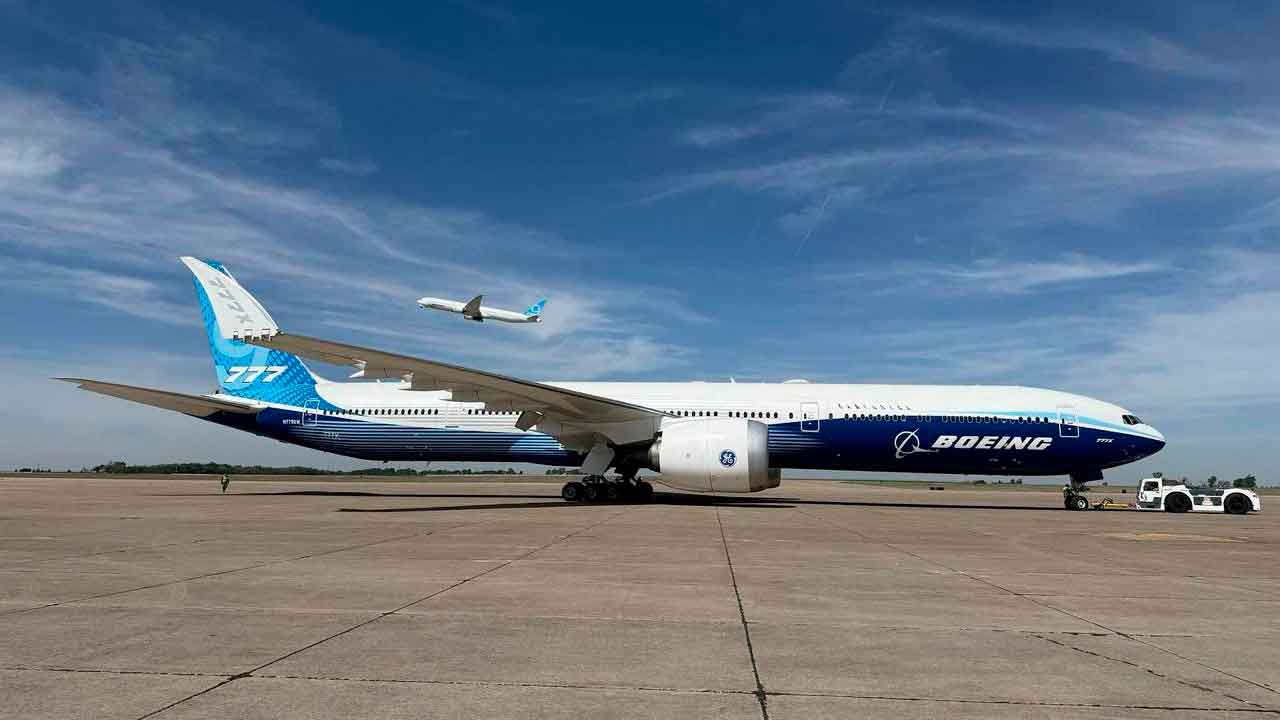
In Oklahoma, Boeing has completed one of the crucial phases of the certification program for the 777-9, the largest twin-engine aircraft in the world.
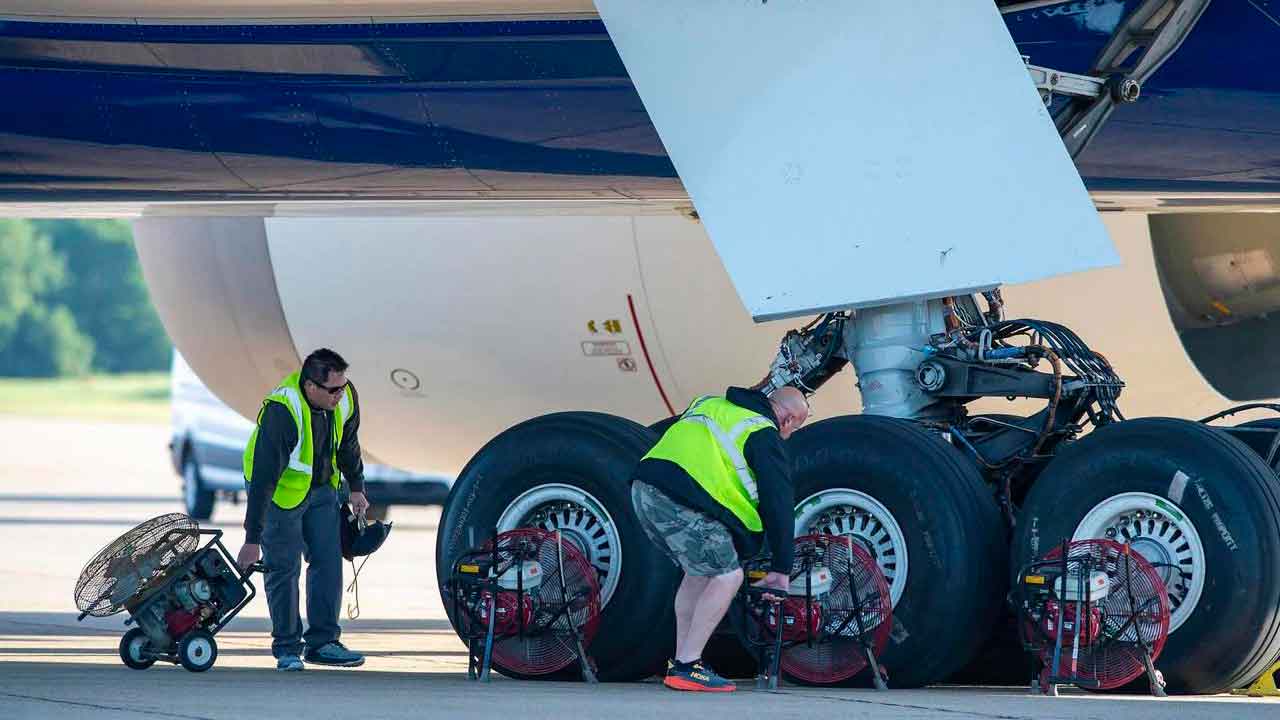
Boeing announced the completion of a key stage in the certification process of the new 777-9: dry-runway brake tests. Initially expected to last 30 days, the process stretched to 63 days at Clinton-Sherman Airfield in Oklahoma due to adverse weather conditions.
+ Click here to watch the video
During this period, the aircraft required 117 tire replacements, facing strong winds, hail, and storms. The first prototype of the model, identified as WH001, arrived in March to undergo intensive braking sessions to prove the reliability of the system.
Despite the challenges, tests were conducted 24 hours a day with the support of local engineers and Boeing specialists from Seattle. At times, trials had to be moved to Lubbock, Texas, in search of ideal conditions.
According to the manufacturer, these extreme trials not only ensure the aircraft’s safety and efficiency but also strengthen team spirit in the face of difficulties.
The next step in the program will be wet-runway brake tests and ice simulations, moving forward toward the model’s final certification. Recently, the Federal Aviation Administration (FAA) authorized the start of the TIA 2D phase, which includes tests related to noise regulations.
The 777-9 is recognized as the world’s largest twin-engine aircraft, and its certification is awaited as a milestone for the next generation of commercial aviation.
+ BMW Unveils Scooter Concept, But Design Detail Raises Questions
Source and images: Boeing. This content was created with the help of AI and reviewed by the editorial team.
